A gap.
Something was never learned properly in the first place.

Personalised teaching for 11 to 16 year olds, built by teachers and aligned to the UK curriculum and GCSE exam boards.
Get Started for FreeNo credit card. Experience what your child will see.
Most parents can tell when something is not right. Far fewer can tell what it is.
A report says working hard. A revision guide gets bought. The hours go in, the grades stay where they were, and nobody can say why.
The reason is usually specific, and usually invisible from the outside. A missing idea from two years ago. A misunderstanding that quietly took hold. Or a child who has stopped believing they are any good at it.
The same mistake can mean four different things, and each one needs a different response.
Something was never learned properly in the first place.
Something was learned, and learned wrongly.
The understanding is there. The willingness to use it is not.
The knowledge was fine. The reading of the question was not.
SideCog works out which it is, and teaches accordingly.
In a room of thirty, a lesson has a timetable to keep. That is where most gaps start.
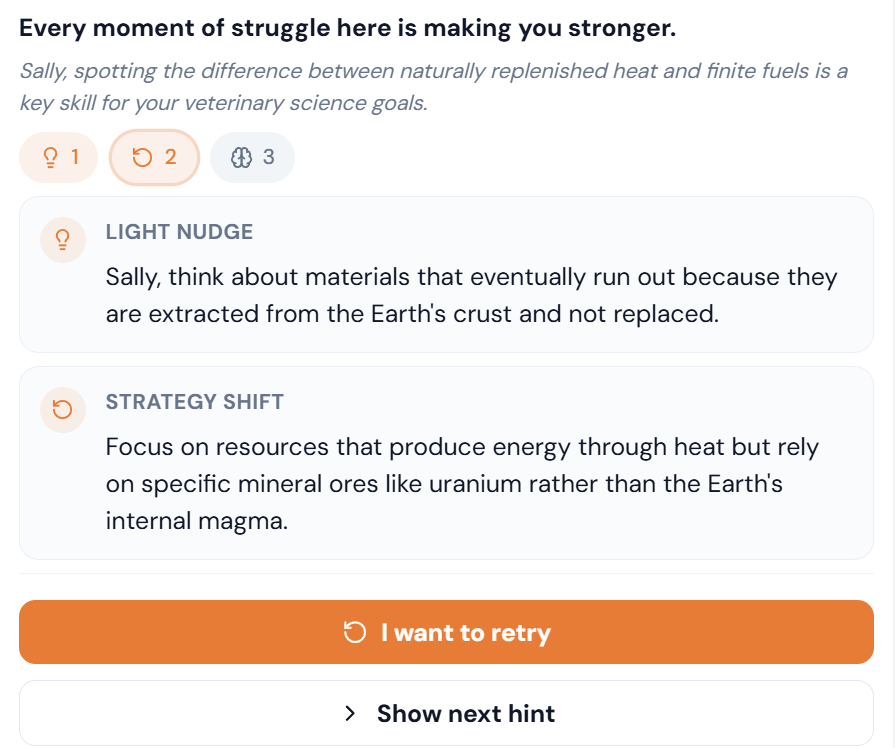
Here, a wrong answer does not reveal the answer and does not move on. Your child gets a nudge towards the thinking, then the specific step, then the method, and does the work themselves at every stage.
If it still is not right, it comes back. Not once, but on a schedule, until they get it right in a form they have not seen before.
And nobody watches them get it wrong. In a class of thirty, being wrong is a public event. Here it is not.
Your child has to know what they do not understand in order to ask about it. The ones who need help most are exactly the ones who cannot.
Waits to be asked.
Answers whatever is put in front of it.
Knows nothing about your child, their exam board, or what they got wrong last time.
Decides what comes next.
Knows what they are studying, and what they got wrong last time.
Works inside a closed environment with no access to the open internet, so every conversation stays on the learning.
An answer finishes the homework. Understanding finishes the exam.
The diagnostic. Eight questions, five minutes, written by qualified teachers. No account needed to start.
The report. Where the gaps are, what caused them, and what they will affect next.
The teaching. Cogsy, your child's learning companion, teaches what comes next and adapts as they work.
Your dashboard. What has been understood, what has not, and what is being done about it.
Your dashboard shows the topics your child has understood, the gaps still open and which of them matter most, and what SideCog is doing about each one.
It is not a transcript of every wrong answer and it is not another grade. It is the specific thing to ask them about on the way home.
Look around the parent dashboard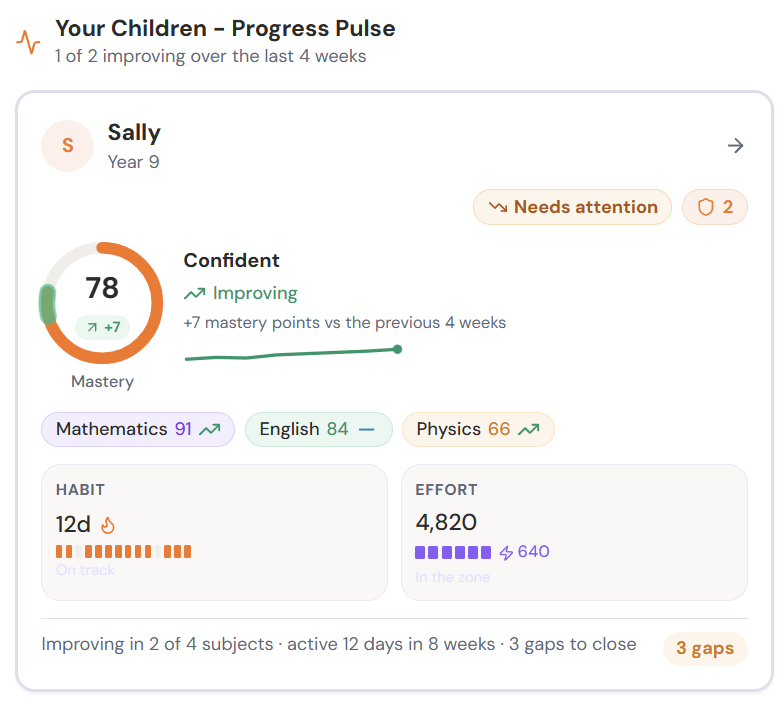
20 years
Julian Dance, co-founder and Head of Big Ideas
Taught secondary science before building SideCog, after seeing too many students give a right answer for the wrong reason and carry the gap into their GCSEs.
30 years
Gareth Moores, Educational Lead
Teaching, school leadership and teacher training, including work with vulnerable learners and in specialist settings.
SideCog is not a technology company that hired an education adviser. The teaching came first.
Meet the team7 days
After that, keep a free account with five minutes of learning a day, or go unlimited for £39.99 a month including VAT. Cancel whenever you like.
See everything that is included
We are also keeping a small number of Founding Family places open, for families who want to help shape SideCog as we grow. £9.99 a month for three months, then £19.99 for as long as you stay, including VAT.
See what Founding Families getNo card and no account needed to start.
Teaching, revision and exam guidance written by the teachers behind SideCog.
Former head of science Julian Dance explains why the DfE’s plans for Key Stage 3 matter, what strong foundations look like in a Year 8 science lesson and why SideCog chose Oak National Academy’s curriculum.
16 November 2026
How can you help your child revise after GCSE mocks? Use their answers to spot gaps, connect what they know and practise unfamiliar exam questions.
13 November 2026
An AI tutor can mark a correct answer wrong. Here are five checks for choosing one for KS3 or GCSE.
11 November 2026
Could an AI tutor help your child with GCSE revision, or will it simply give them answers? Julian Dance explains what good tutoring actually does, where AI can help, where a human tutor still matters, and four questions parents should ask before choosing a learning tool.
6 November 2026
You can see your child is struggling, but where do you start? Research shows why interested conversations matter during the GCSE years, and how clearer learning insights can help parents offer focused support.
1 October 2026
Practical hints, tips and insights to make learning at home more effective.
We respect your privacy. Unsubscribe at any time.